
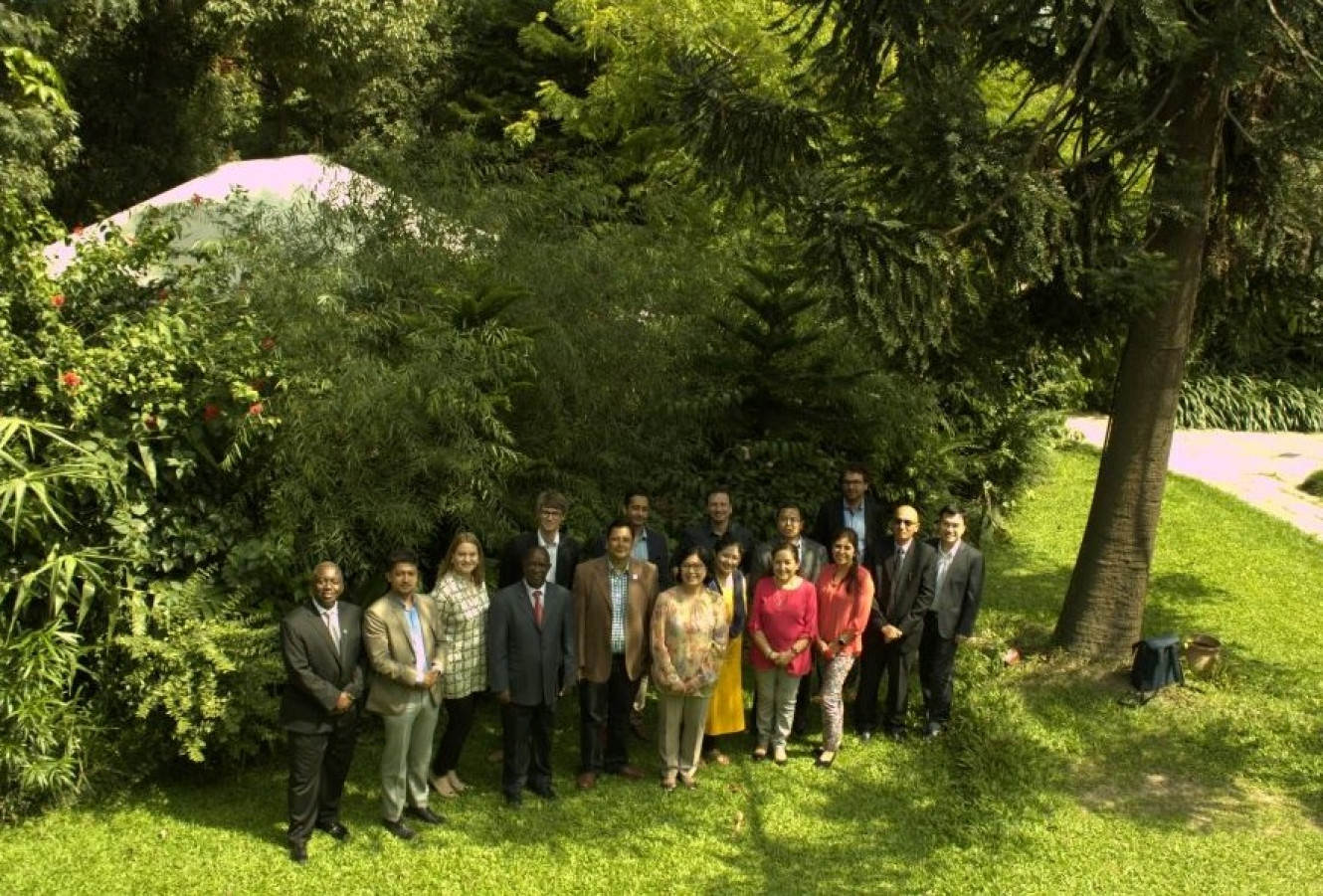
International Peer to Peer Learning Alliance (P2P-LA) on Climate Finance Integrity (CFI) was held in Kathmandu from 26 to 28 September 2018. The workshop was organized by the German International Development Corporation (GIZ) along with the Transparency International (TI), and hosted by National Trust for Nature Conservation (NTNC), Alternative Energy Promotion Centre (AEPC) and United Nations Development Programme (UNDP) Nepal.
This Alliance was established in the second half of 2017 with the support from the Effective Institutions Platform (EIP), Transparency International (TI) EU and the GIZ. This initiative is aligned with the requirements of the Green Climate Fund (GCF) for institutions to gain access to readiness and project finance, which among others, is undertaken so that fiduciary policies are in place as well as to demonstrate the effectiveness of those policies. In the field of anti-corruption and integrity, this means setting up or strengthening internal mechanisms to handle reports or disclosure of corruption or fraud, reaching out to affected stakeholders to open and safeguarding lines for reports to come forward, and ensuring whistle blower protection and confidentiality.
The workshop was organized with the intention to bring the Alliance to the next level, so that it can achieve sustained contact between individuals and consider the arrangement for facilitation and (self-) financing for the international Alliance and their own activities in the future in order to ensure sustainability. The workshop was undertaken to provide a venue for different organizations that have been GCF-accredited or are in the process of applying for accreditation to share and learn from each other tacit knowledge and experience on climate finance integrity matters. The members of the Alliance include NTNC; AEPC; Ministry of Water and Environment, Uganda; Vietnam Development Bank (VDB), Vietnam; Profonanpe, Peru; and Central American Bank for Economic Integration (CABEI), Honduras. Altogether 16 participants attended this workshop including the Head of GCF IIU Mr. Ibrahim Pam.


